What is the hidden job market?
These are hires made without a published job ad: through networks, employee referrals or direct approach. According to Apec (2025), 41% of hired managers were already known to the company or recommended, 43% in SMEs. In one SME in four (28%), the network is how the company met the manager it finally hired.
Should you write to headhunters to find a job?
No. A headhunter is mandated by a company for a specific need, a specific profile, a specific timeline. If your profile does not match one of the 3 to 8 active assignments at the moment you write, your message cannot produce anything. Write to the decision-makers at the companies that interest you.
How many companies should you target?
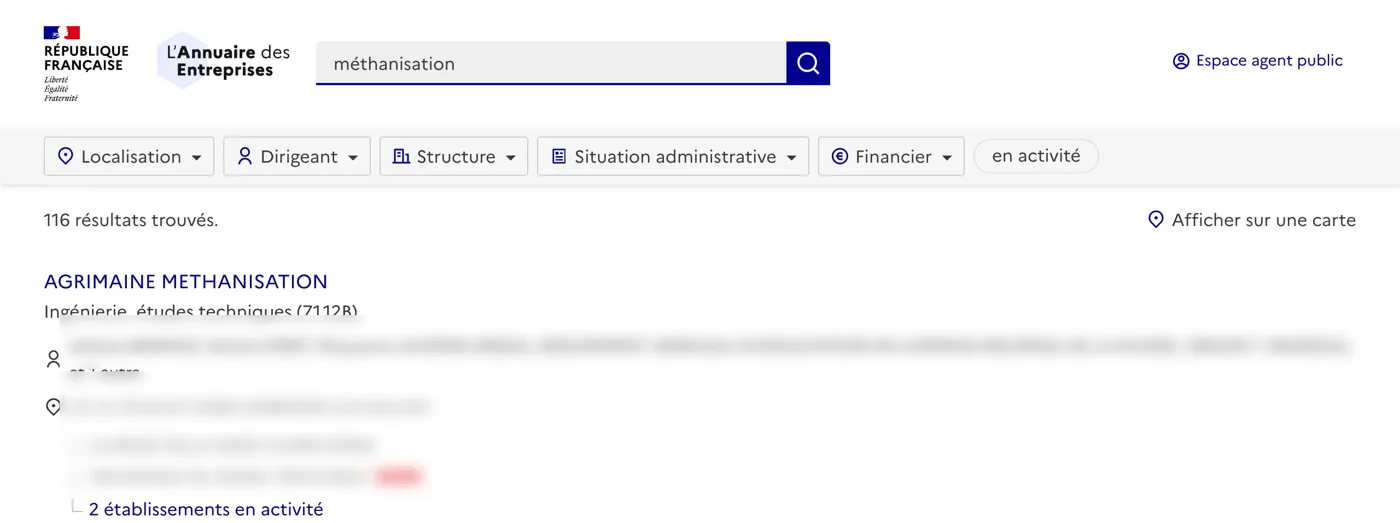
50 to 100 companies, with 2 identified decision-makers for each (name, role, LinkedIn URL) and a trigger spotted: fundraising, signed contract, new executive. A full cycle runs on 100 contacts, and the method takes 3 to 6 months.
What should go in a first message to an executive?
Three ingredients, in under 300 characters: a hook that proves you have read the other person (a post, a project, a contract), an open question about their situation, and no request about you. No CV attached, no “I am looking”. You do not talk about yourself before the 3rd exchange.
Should you attach your CV to the first message?
No. A CV attached to the first message turns the exchange into a request before any relationship exists. It goes when the other person asks for it, often after the second or third exchange.
Should you write to HR?
Not first. HR protects the process; the need arises with the operational decision-maker: executive, industrial director, technical director, site director. That is who you should aim at.
Does X-Ray search still work in 2026?
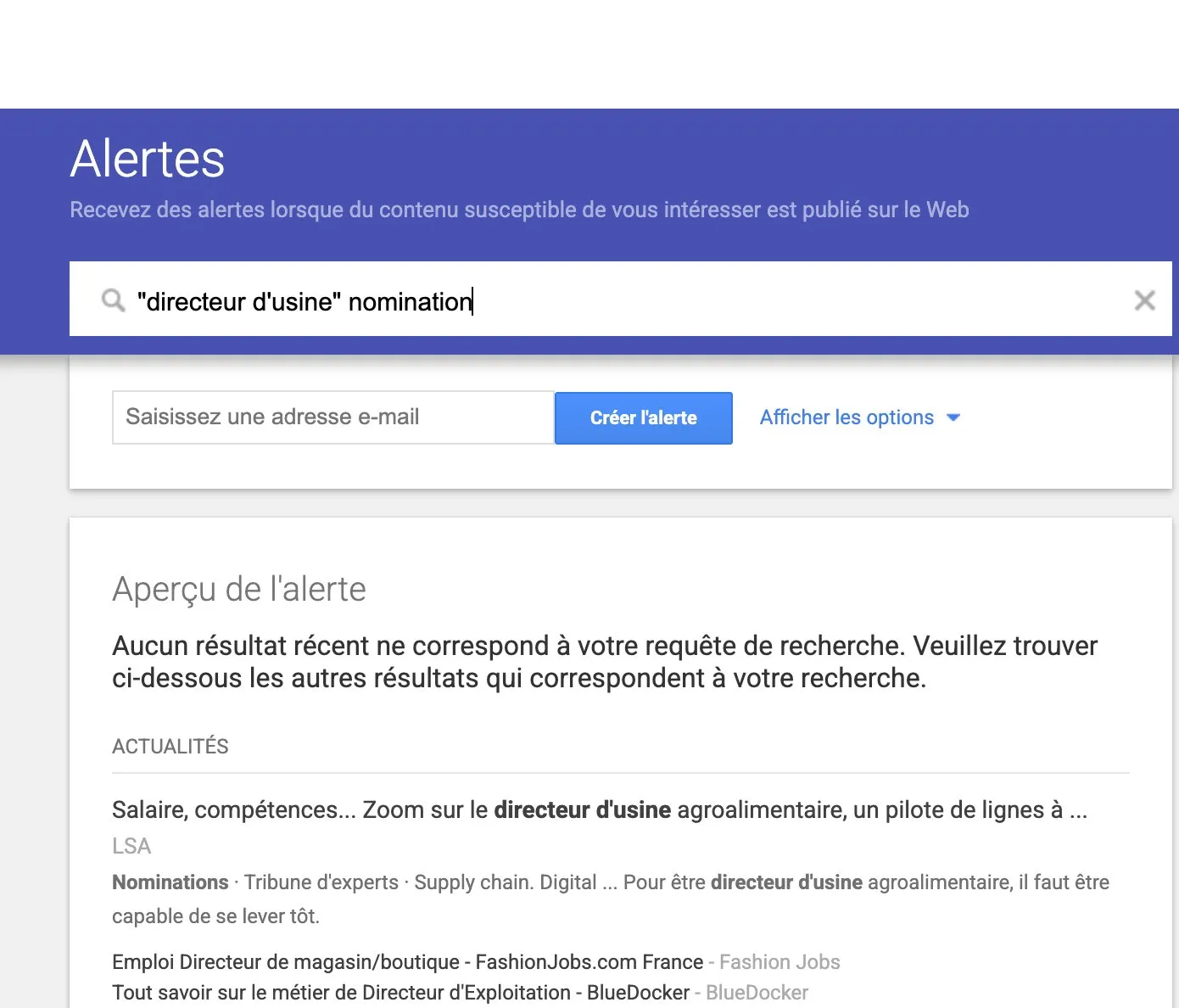
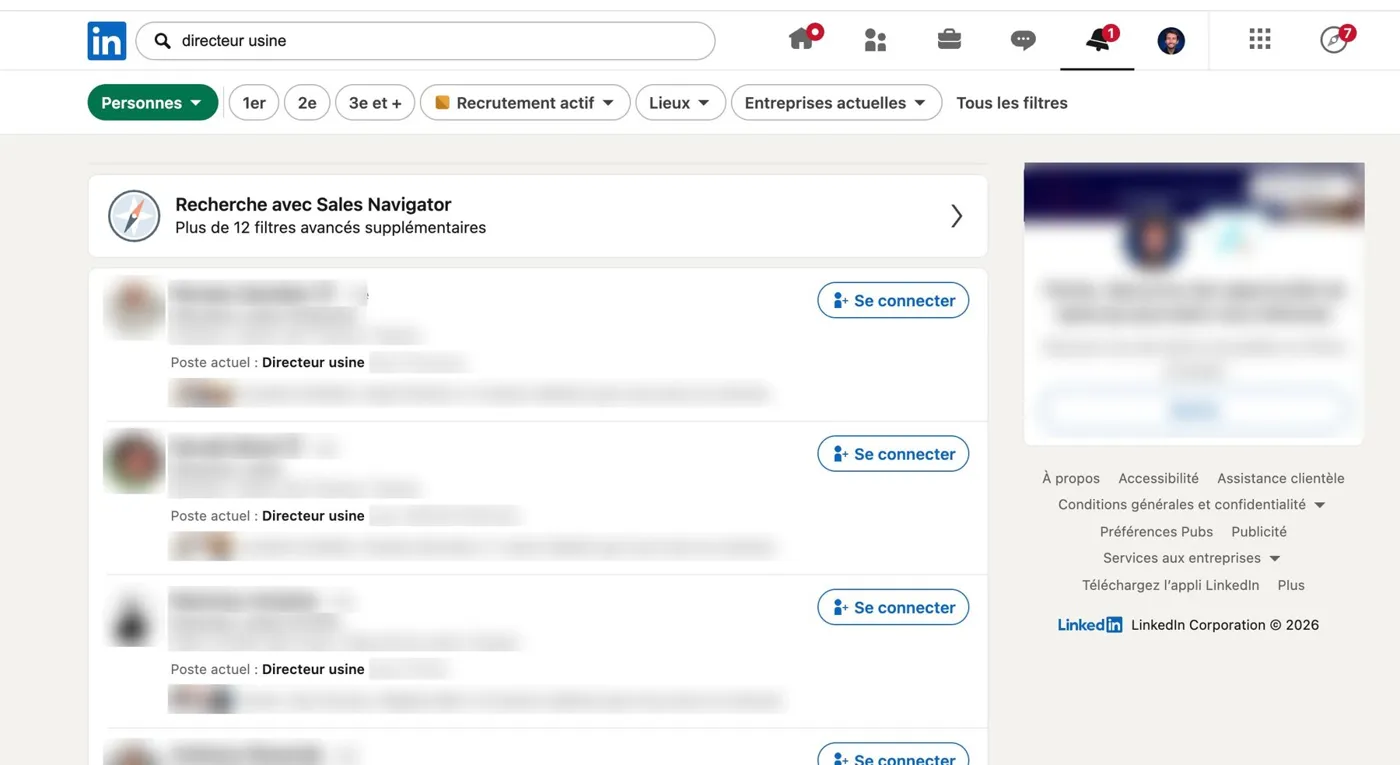
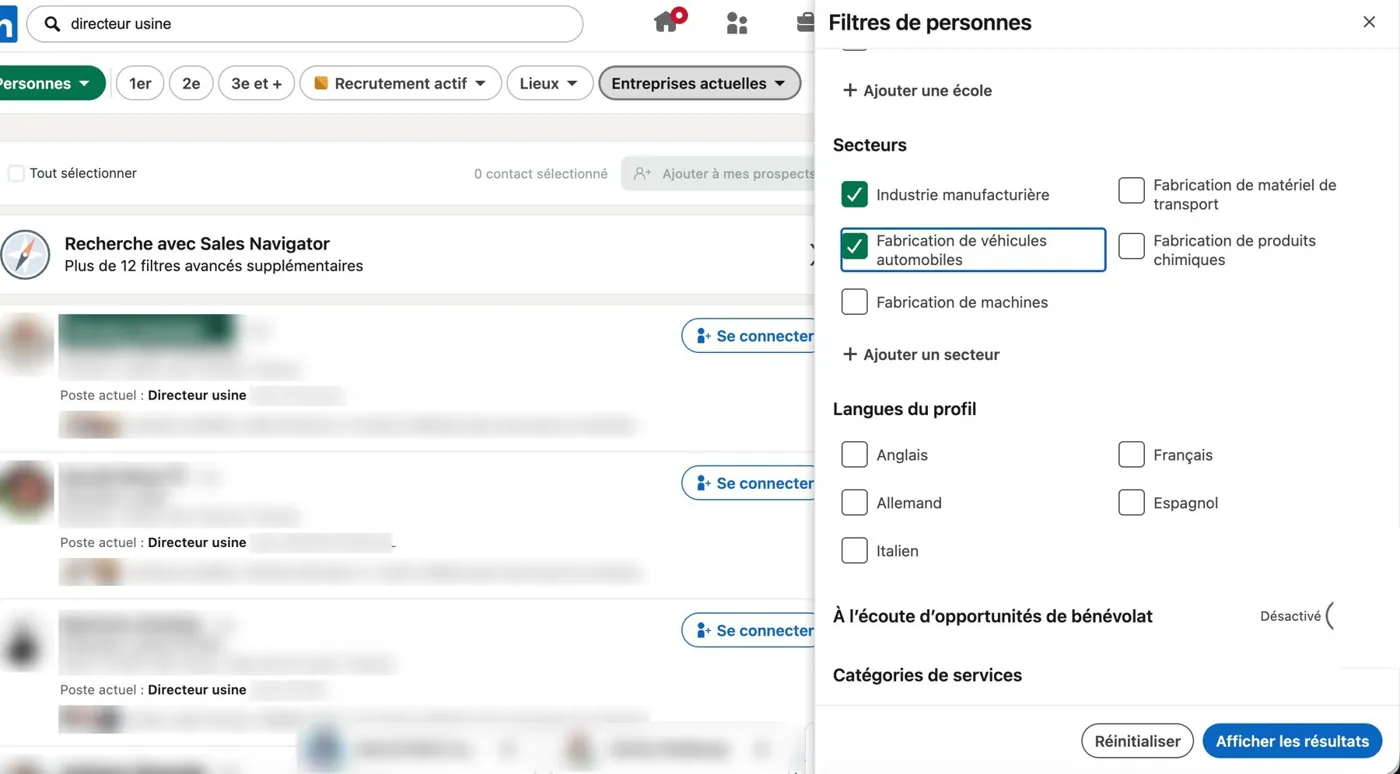
Yes. Tested on 23 September 2026: site:fr.linkedin.com/in for profiles, intitle: for the role, and expertise keywords in quotation marks, which Google searches across the whole profile.
How many follow-ups can you send without harassing?
Two follow-ups at most, spaced 7 to 10 days apart, switching channel. Each follow-up brings something new, not pressure.
What results can you expect from a cycle of 100 contacts?
Volta benchmark: on average 8 to 15 replies, 4 to 8 conversations and 1 to 2 serious leads. Job hunting is 80 to 90% non-replies: you measure what you send, not what comes back. If you have not reached your 100 contacts, your zero results teach you nothing.
How do you ask for an introduction at the end of an interview?
“Would you have two or three people in mind whom you think it would be useful for me to meet? I can prepare the introduction note.” Volta benchmark: the acceptance rate rises from 30% to 80% when you offer to draft the introduction yourself.
Should you stop answering job ads?
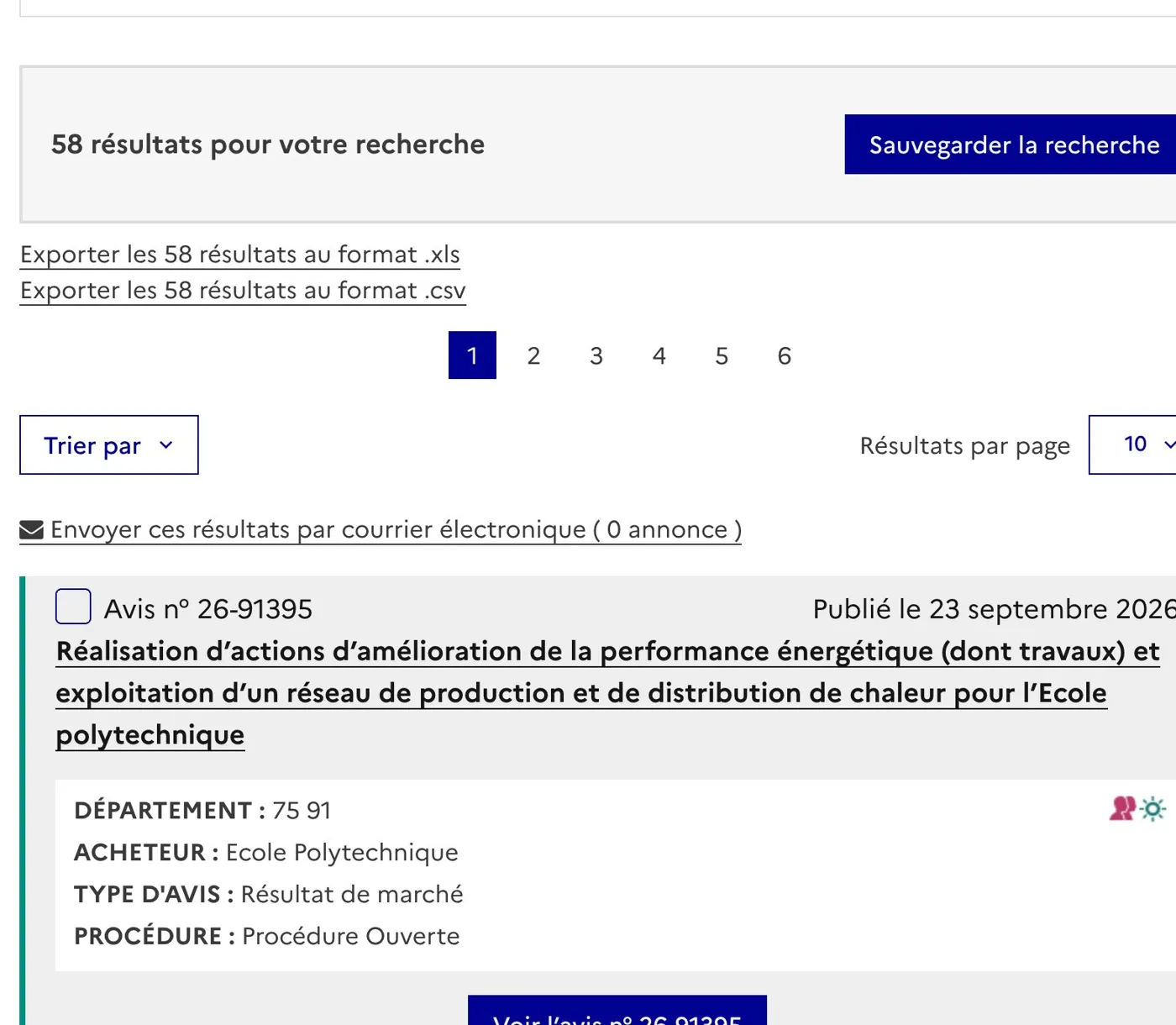
No. The job ad remains the leading hiring channel: for 54% of companies, it is what most often led to meeting the hired manager (Apec 2025). Answer the ads that genuinely match your target. The rest of your time goes to becoming one of the 4 hired managers out of 10 whom the company already knew or who were recommended to it.
How do you get noticed by a headhunter?
You do not apply to a headhunter, you make yourself findable. They search by job title and by trade keywords, like the queries in step 2: your LinkedIn profile must carry your exact title, your facilities, your technologies and your region. In 2023, one in two managers in post was approached at least once by a headhunter or a firm (Apec 2024). At Volta Executive, the way in is a job opening: you submit your CV, and we contact you if your profile matches.


 With the method